
PRP vs Exosomes for Hair Loss: Which Is Better?
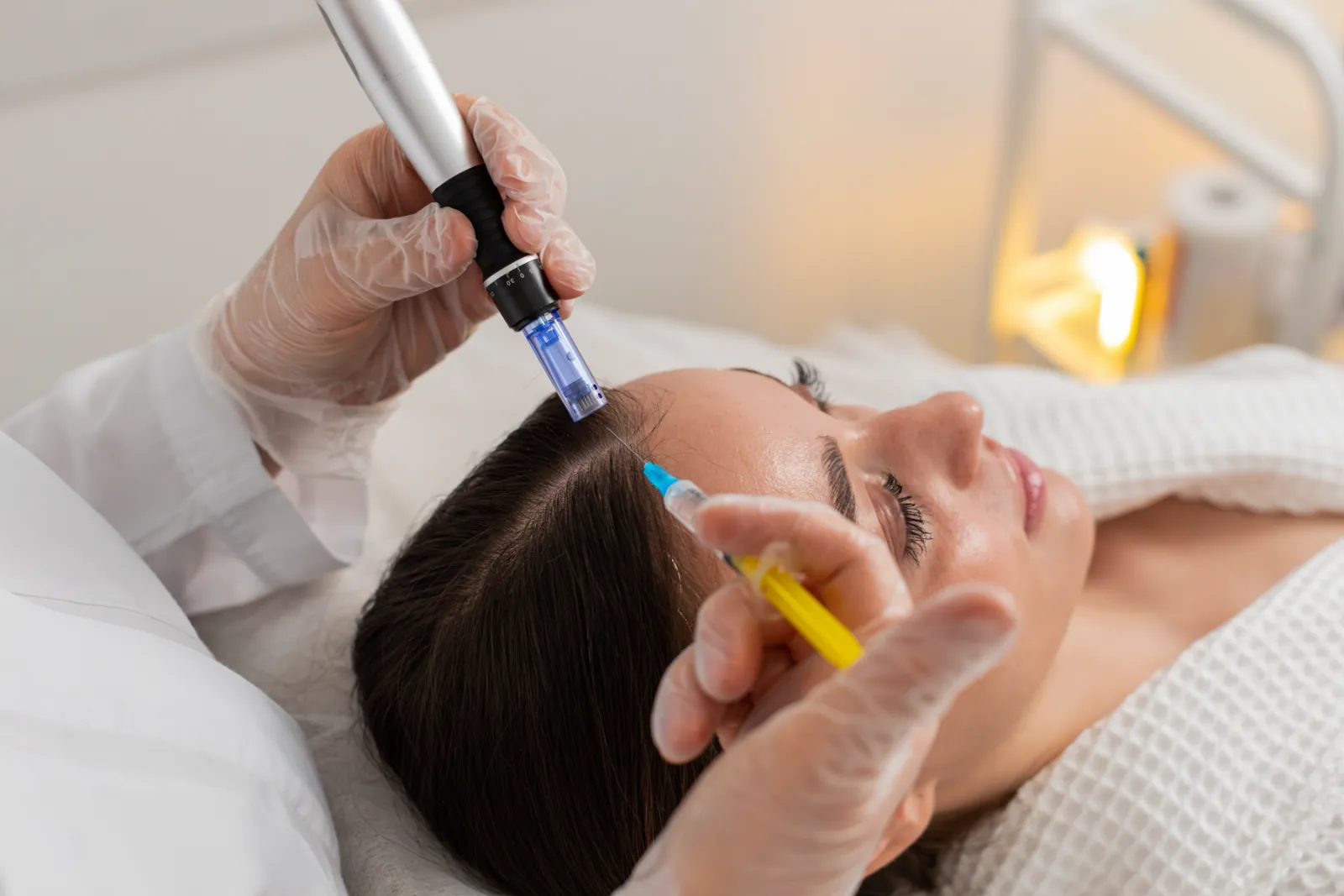
PRP is the better-established option for thinning hair, while exosomes are a newer regenerative treatment that some patients choose when they want a cell-free alternative or extra support alongside PRP. Both deliver growth signals to weakened follicles to help them produce stronger strands. PRP comes from your own blood, and exosomes are purified signaling particles prepared for treatment. Neither can regrow hair where follicles are already gone, and the best choice depends on the cause and pattern of your hair loss.
How PRP Works for Hair
PRP therapy starts with a small blood draw. The sample is spun to concentrate the platelets, which carry growth factors, and the concentrate is placed into the thinning areas of the scalp. Because it comes from your own body, there is no donor material involved. We also offer PRF, a related preparation that releases its growth factors more slowly.
PRP is usually done as a series of sessions spaced several weeks apart, followed by maintenance visits. Most patients notice less shedding first, then thicker-looking hair over the following months.
How Exosomes Work for Hair
Exosomes are microscopic vesicles that cells release to communicate with one another. They carry proteins, growth factors and genetic signals. In hair treatment, purified exosomes are delivered to the scalp to prompt the body’s existing cells toward renewal. Exosomes contain no living cells, which is what separates them from stem cell therapy.
No blood draw is needed. Most sessions take about an hour, and treatments are typically performed as a series spaced several weeks apart so each round builds on the last.
PRP vs Exosomes Compared
| PRP / PRF | Exosomes | |
|---|---|---|
| Source | Your own blood | Purified exosomes prepared for treatment |
| Blood draw | Yes | No |
| Track record for hair | Longer | Newer and still developing |
| Typical plan | Series of sessions, then maintenance | Series of sessions, then maintenance |
| Can be combined | Yes | Yes |
Which One Is Better for You
There is no single winner for everyone. These are the questions we use to choose:
- How long has the hair been thinning? Regenerative treatment works best while follicles are still present but weakened. Early thinning usually responds better than long-standing loss.
- What is causing the loss? Pattern thinning, shedding after stress or illness, and hormonal changes behave differently. Your provider assesses the pattern before recommending a plan.
- Is a blood draw a problem for you? If it is, exosomes avoid it.
- Have you tried PRP before? Patients who saw only a modest response to PRP sometimes add exosomes for layered support.
For many patients, the answer is a combination. Some plans pair exosomes with PRP or PRF during the same visit, as part of a broader hair restoration plan.
Signs It Is Time to Start
Regenerative treatment works best while follicles are still present, so timing matters more than most people expect. It is worth booking an evaluation if you notice any of these:
- A wider part, or more scalp showing under bright light.
- A ponytail that feels thinner than it used to.
- A receding hairline or thinning at the crown.
- More hair than usual on your pillow, in the shower drain or on your brush for several weeks.
Sudden or patchy hair loss, or hair loss with other symptoms such as fatigue or weight change, deserves a medical look first. Thyroid problems, iron deficiency and hormonal changes can all cause thinning, and treating the cause comes before any scalp treatment. Your provider reviews your health history and asks about recent illness, stress, medications and family history so the plan matches the reason your hair is changing.
Starting earlier also tends to mean a simpler plan. Strengthening thinning hair is easier than trying to recover density after it has been lost for years.
What Results Look Like
Hair grows slowly, so patience is part of the plan. Most patients first notice less shedding, then thicker-looking hair over several months. Results vary, and regenerative treatment cannot restore a hairline where follicles are no longer there. Ongoing maintenance sessions help keep the improvement, because the underlying causes of thinning continue over time.
Aftercare for Both Treatments
Keep the scalp clean and avoid touching it unnecessarily for the first day. Styling products, strenuous workouts, saunas and swimming are usually paused for a day or two. Sun protection matters in South Florida, so wear a hat when you are outdoors after treatment. Most people return to work right away.
How We Approach Hair Restoration
At our West Palm Beach office, hair restoration is planned by physicians rather than handed off to a one-size protocol. We offer PRP, PRF, exosome therapy and stem cell therapy, so the treatment is chosen for your pattern of loss rather than for what a single machine can do. Patient-specific products are prepared in our on-site ISO-certified lab. Your first visit is a conversation about your goals and health history and a close look at the scalp, so the plan fits how your hair is actually changing.
If your hair is only one of your goals, we can coordinate it with other care such as peptide therapy or a personalized wellness program.
Frequently Asked Questions
Is PRP or exosome therapy better for hair loss?
PRP has the longer track record. Exosomes are newer and avoid a blood draw. Many patients do best with a plan that combines them, chosen for the cause and stage of their hair loss.
How many sessions will I need?
Both are usually done as a series spaced several weeks apart, followed by maintenance visits. Your provider sets the number based on your response.
Can exosomes regrow a bald area?
No. Regenerative treatments strengthen weakened follicles. They cannot create new follicles where none remain.
Do exosomes contain stem cells?
No. Exosomes are signaling particles released by cells, and they contain no living cells.
More From Our Blog




Nothing About
You Is Standard.
Neither is our approach. Physician-led expertise, proprietary innovation, and treatments designed around you.